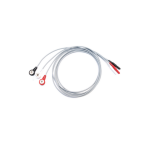
Snap Shielded Twin-Pin EKG Leadwire with Polyurethane Wire Coating
$42.00
Secure Encrypted Checkout
Need Help?
Description
Snap Shielded Twin-Pin EKG Leadwire with Polyurethane Wire Coating
The Snap Shielded Twin-Pin EKG Leadwire is a patient-connection lead designed to transmit ECG signals from disposable or reusable snap electrodes to a compatible ECG trunk cable, patient monitor, telemetry transmitter, or diagnostic ECG system that accepts a twin-pin leadwire interface. Built for routine clinical use, it combines a secure snap electrode attachment with a shielded conductor design and a durable polyurethane outer jacket to support reliable signal transfer in demanding care environments.
Intended Use
This leadwire is intended for use by trained healthcare professionals for noninvasive electrocardiography (ECG/EKG) monitoring and diagnostic signal acquisition. It is used as part of an ECG system and is not a standalone diagnostic device.
Connection Style and Compatibility
On the patient end, a standard snap connector mates with common snap-style ECG electrodes to promote quick placement and consistent contact. On the equipment end, the twin-pin connector is designed to interface with systems that use twin-pin leadwire inputs. Always verify connector type, pin spacing, and system compatibility before use.
Shielded Signal Path for Cleaner Traces
The shielded construction helps reduce pickup of external electrical noise that can contribute to artifact, supporting stable waveforms in electrically active environments. Shielding is particularly beneficial where multiple devices, power cords, or motion may introduce interference, and it is designed to complement—not replace—proper skin preparation, electrode selection, and cable routing best practices.
Polyurethane Wire Coating
A polyurethane jacket provides a flexible, abrasion-resistant outer layer that supports repeated handling, routing around bed rails, and routine cleaning. Polyurethane is commonly chosen in clinical cabling for its balance of softness, kink resistance, and durability, helping the leadwire maintain performance and appearance over time.
Key Features
- Snap patient connector for fast attachment to snap electrodes
- Twin-pin equipment connector for systems using twin-pin leadwire inputs
- Shielded design to help minimize electromagnetic interference and motion-related artifact
- Polyurethane jacket for flexibility and resistance to wear from daily use
- Clinical-ready construction for bedside monitoring, transport, and general care workflows
Typical Care Areas
- Telemetry and step-down units
- Emergency and urgent care
- ICU/CCU monitoring setups
- Diagnostics and stress-testing prep areas (when compatible with the ECG system)
Cleaning and Handling
Follow your facility protocol and the monitor manufacturer’s instructions. In general, disconnect the leadwire before cleaning, wipe with an approved disinfectant, avoid soaking connectors, and allow to dry completely prior to reuse. Inspect regularly for cracks, exposed conductors, loose snaps, bent pins, or intermittent signal issues, and remove from service if damage is found.
Specifications (General)
| Attribute | Description |
|---|---|
| Patient connection | Snap electrode connector |
| Equipment connection | Twin-pin connector (system-specific compatibility required) |
| Cable shielding | Shielded conductor design |
| Jacket material | Polyurethane |
| Use environment | Clinical ECG monitoring/diagnostics as part of a complete system |
Note: This leadwire does not sterilize the signal path or eliminate artifact on its own. For best results, pair with appropriate electrodes, correct placement, and compatible ECG equipment.